
Math
The 7th graders began their last unit over data and statistics this week. They learned the difference between a population and a sample and how to make population inferences based off of sample statistics. Additionally, they learned two measures of center, mean and median.
The 8th grade and Algebra students were in review mode. Both were reviewing for upcoming check-ins over statistics and quadratics, respectively.
Humanities
This week in Humanities class, students combined creativity and critical thinking through activities inspired by space exploration and science fiction. Using hand-picked images from the recent Artemis program missions, students crafted original poems that captured the wonder, mystery, and excitement of returning to the Moon. They focused on vivid imagery, descriptive language, and emotional tone while connecting real-world achievements in space travel to their own creative voices. Students also continued reading 2001: A Space Odyssey, concentrating on the suspenseful chapters where the crew begins to confront HAL 9000. Class discussions explored themes of trust, technology, and the risks of depending too heavily on artificial intelligence. Students examined how the author builds tension during these scenes and considered whether HAL’s actions were caused by malfunction, conflicting instructions, or something more human-like.
Theme
Our look at the universe expanded again this week as Theme students left the Solar System and began to explore stars and galaxies. We began the week tracing the life cycle of stars. Students researched and read articles on the process, documenting to create a diagram. Students chose different materials to represent the steps in the life cycle, differentiating between stars that start small and large, and ending their life cycles by exploding into supernovas, and the more common ending as a white dwarf.
The BIG reveal this week in Theme came when students looked at the Big Bang. After reading and documenting the basics of the theory they put the idea to the test. Using balloons, the lab demonstration started with creating points in the singularity of the early universe. In three cycles, students expanded their balloons, measuring the distance between the points to graph the changes during expansion.
The BIG surprise was waiting when the balloon was fully expanded. Students took them outside to POP every balloon, which was filled with glitter products. The pop allowed the glitter to scatter across cardstock with glue. The scatter represented the gas and dust that blew out from the Big Bang in random space. Students will construct a class big bang with their cards for POP! IT was pretty epic!!!
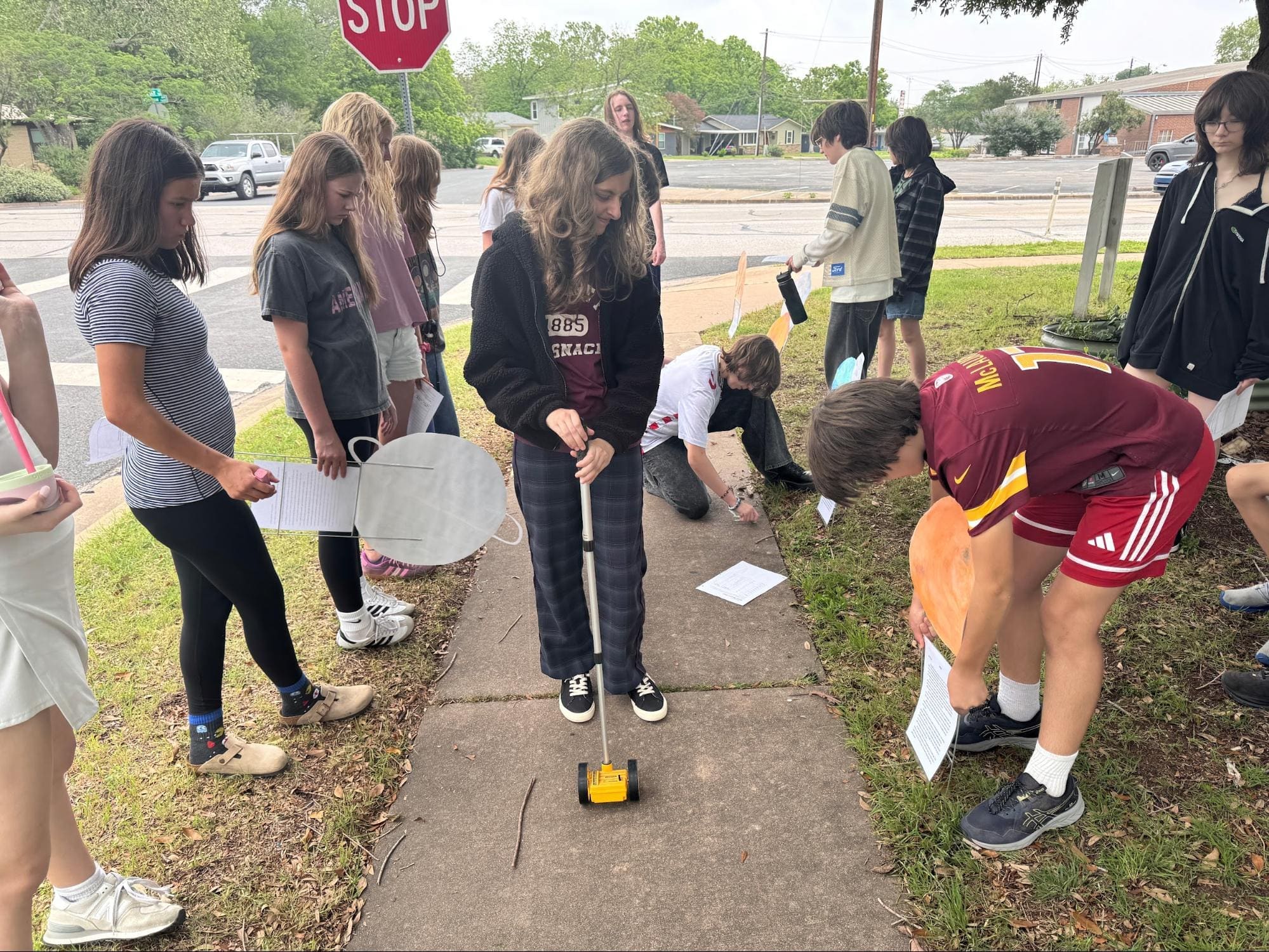
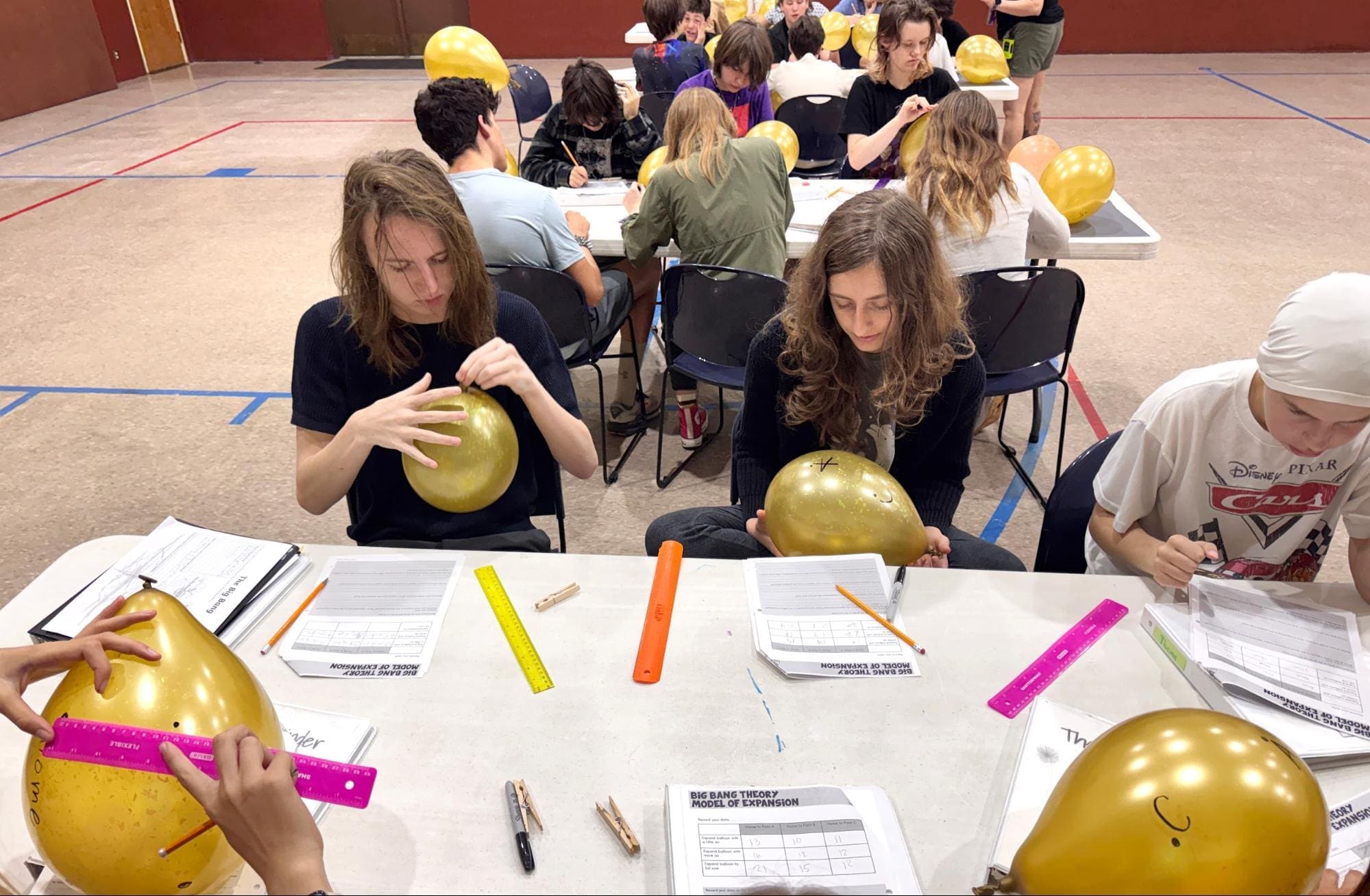
At top, students measure the scale distance of the Solar System, and position information models of the planets in their proper order. The display will be presented during PoP week due to the inclement weather. Above. Students measure distance caused by the Big Band in the early universe.
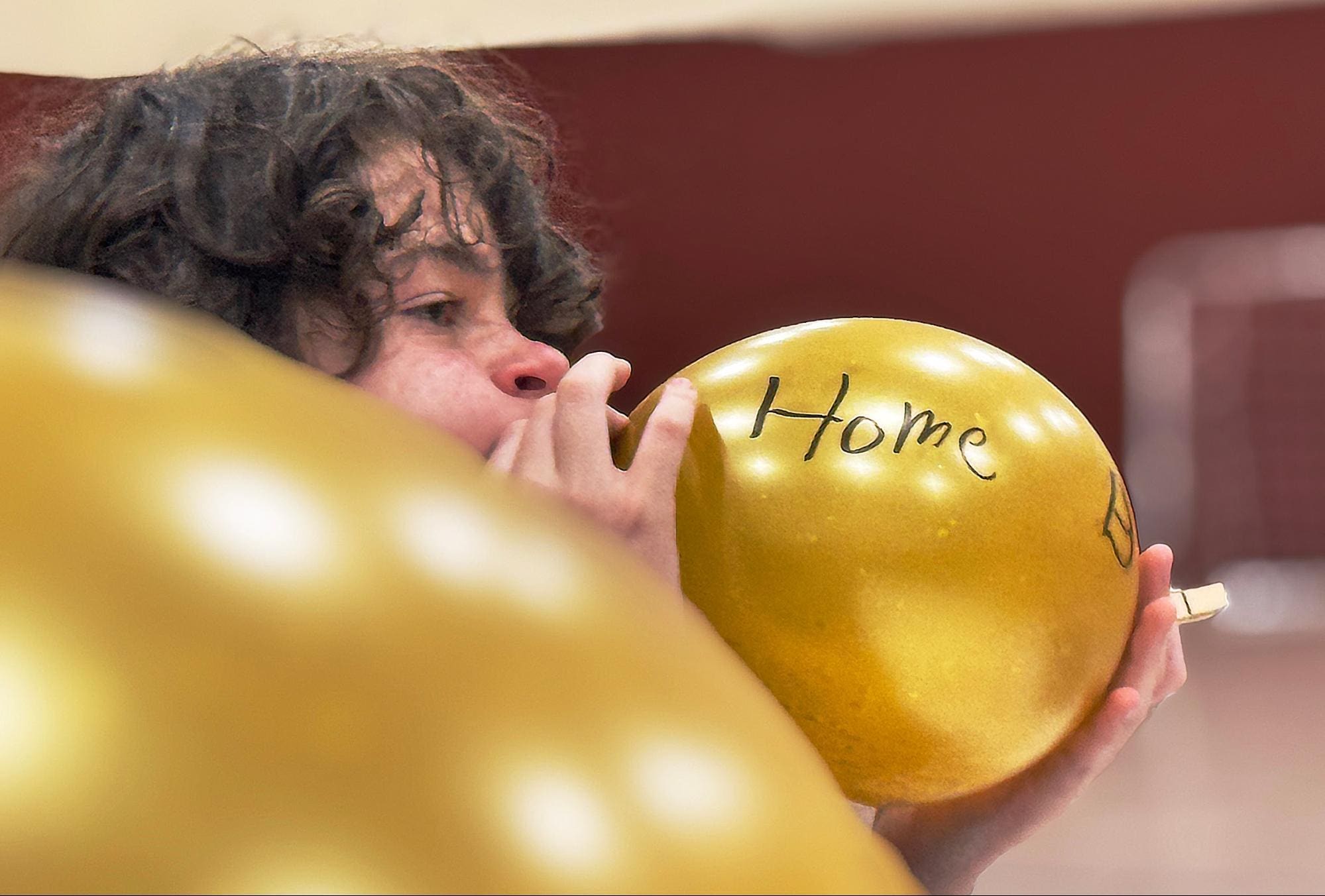
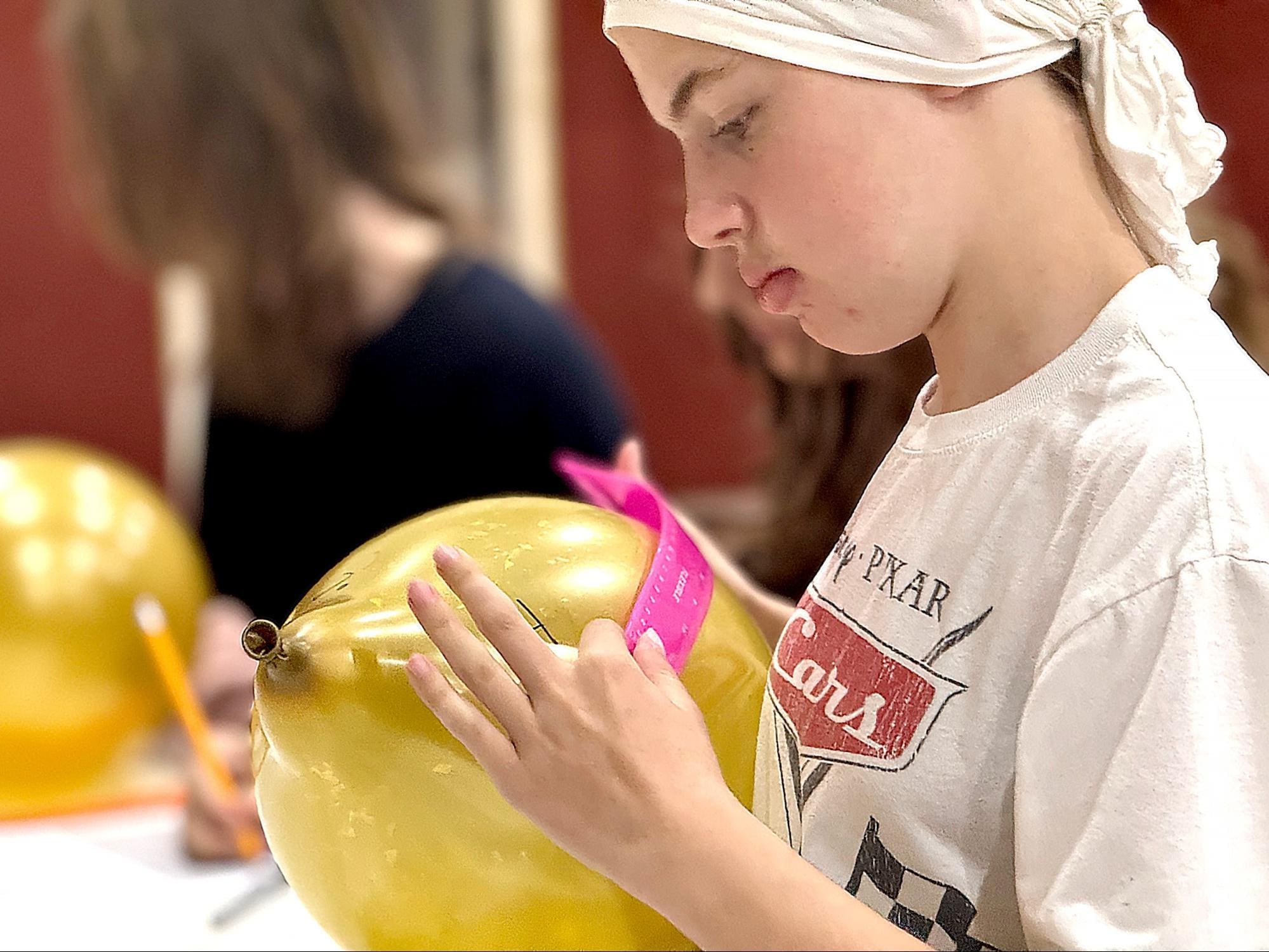
Students use balloons to represent the expansion of the early universe after the Big Bang.
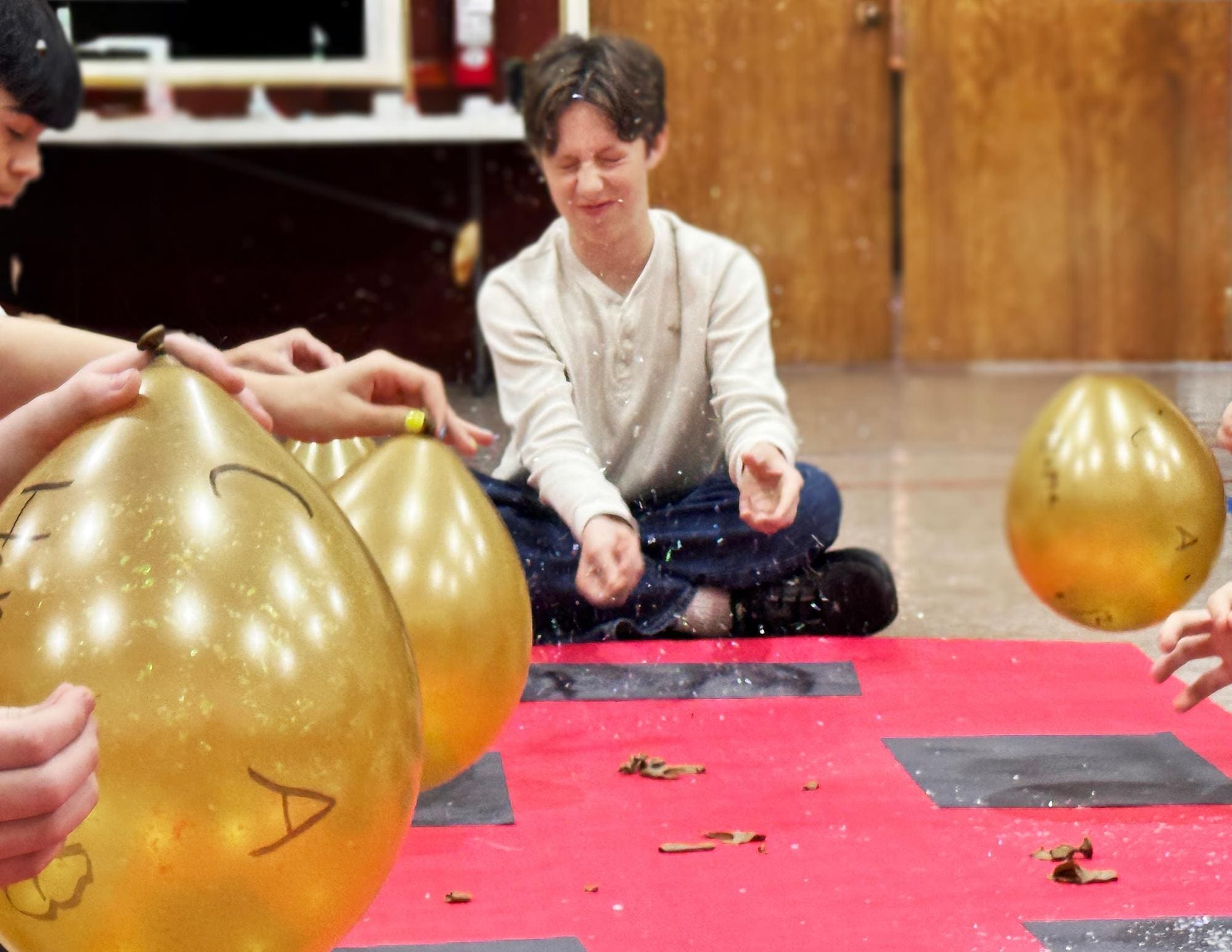
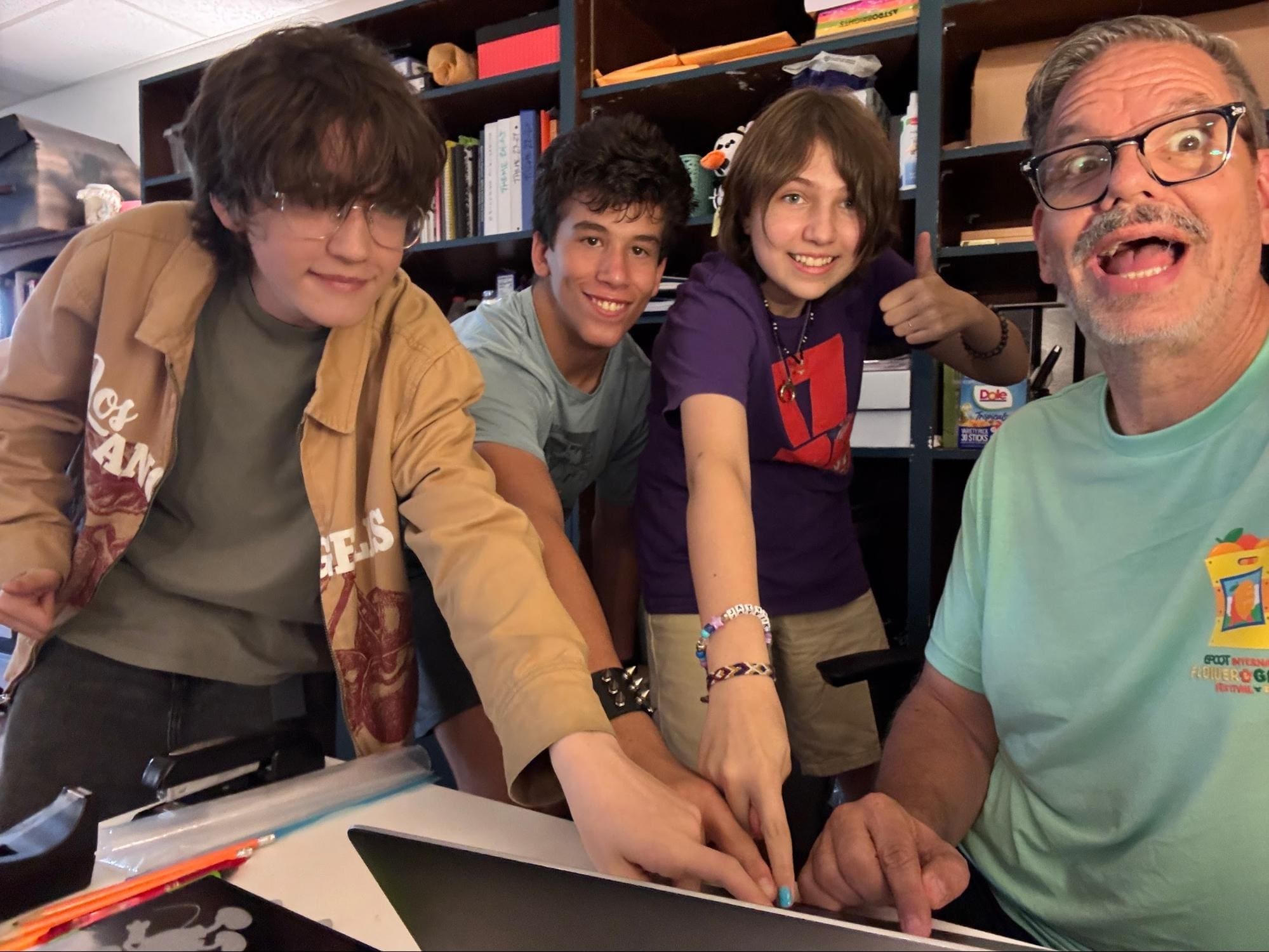
Top: The Big Bang once again presented itself to students in their demonstration! ABOVE: The 8th grade members of the yearbook club all submit this year’s book for publication!