Math
7th Graders finished their probability unit Monday with a lesson over dependent events. They reviewed for two days, then took their check-in. The 8th graders covered writing equations for trend lines and finding the mean absolute deviation for data sets. The algebra students focused on which method of solving a quadratic is best, application problems, and quadratic regression. The algebra students have finished their curriculum and now just need to study for their quadratic unit check-in and their comprehensive final exam!
Humanities
Students continued their exploration of 2001: A Space Odyssey, combining reading, discussion, and creative thinking as they examined one of science fiction’s most influential stories. Students focused on key chapters from the novel while analyzing themes such as technology, intelligence, and the relationship between humans and machines. To deepen understanding, students watched selected clips from the 1968 film adaptation 2001: A Space Odyssey and compared how important scenes were presented differently in the book and on screen. They discussed how directors use visuals, music, and pacing, while authors rely on descriptive language and imagination.
Vocabulary development was another important focus this week. Students studied words connected to the novel and space exploration, then demonstrated comprehension by writing original sentences using each term in context. This helped strengthen both reading comprehension and writing skills. Students also completed thoughtful journal entries centered on the character of HAL 9000. They reflected on whether HAL should be viewed as a helpful tool, a dangerous machine, or something more complex. These discussions encouraged students to think critically about responsibility, ethics, and the future of artificial intelligence.
Theme
Here comes the Sun…dododo…Here comes the Sun…And I say: IT’S ALRIGHT!
These immortal words from the Beatles classic fit the Theme mold perfectly this week as the students dove right into the Solar System! Student groups at each level were assigned one object in the Solar System to investigate and illustrate. The object was to discover more about our home base in the Milky Way galaxy, and to apply our understanding of SPACE in Space. To convey the vastness of our solar system, students used scale models to represent the actual distances between the planets. The planets will be placed outside the school building, allowing everyone to see how spread out the solar system really is! Students calculated the actual distances between the sun and the planets, in both millions of miles and the ratio in feet. Sidewalk chalk completed the model with names and measurements.
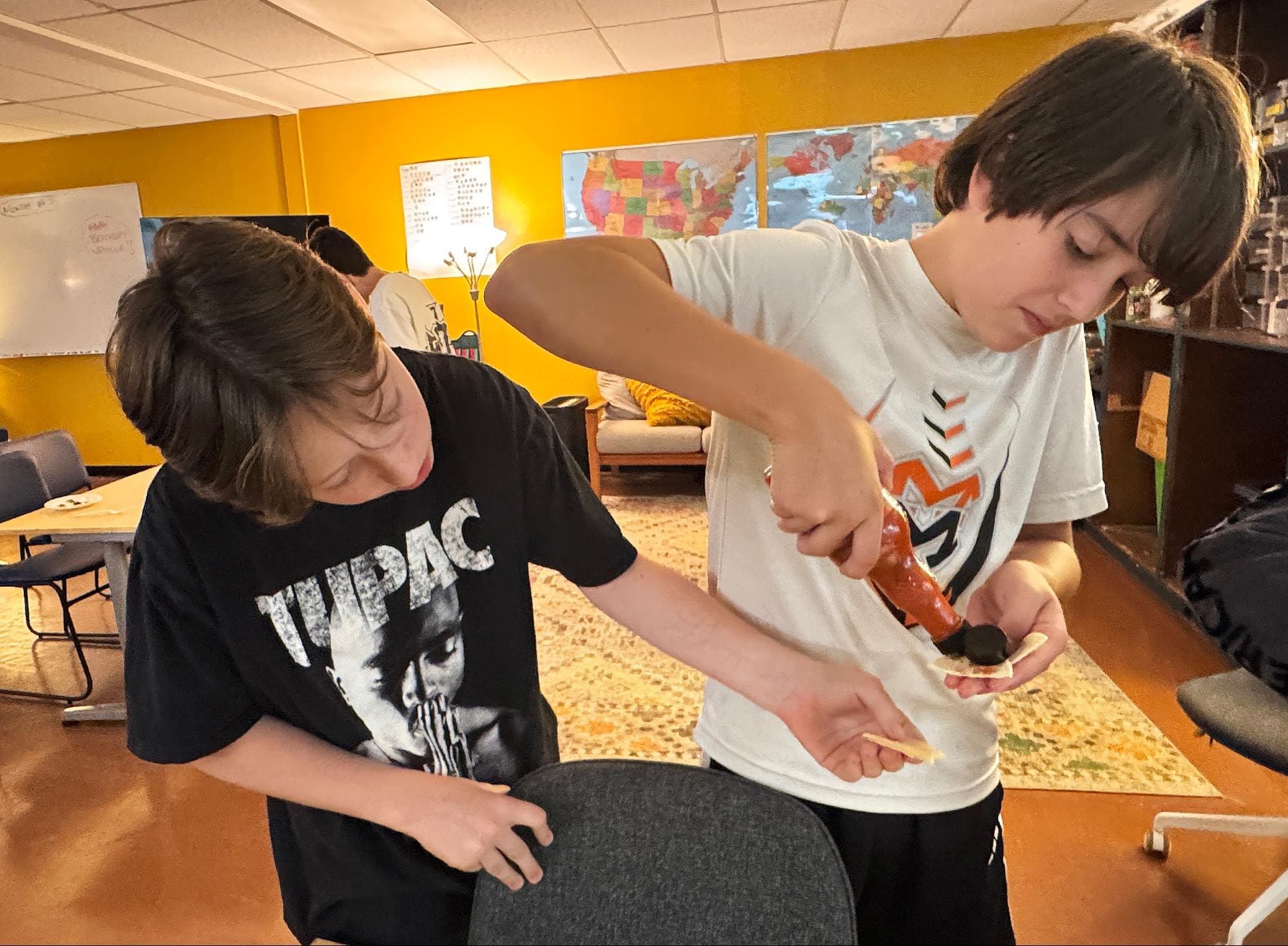

Epsilon students enjoy samples from the World War Victory Garden as well as tidbits that represent the food eaten by astronauts on the International Space Station.
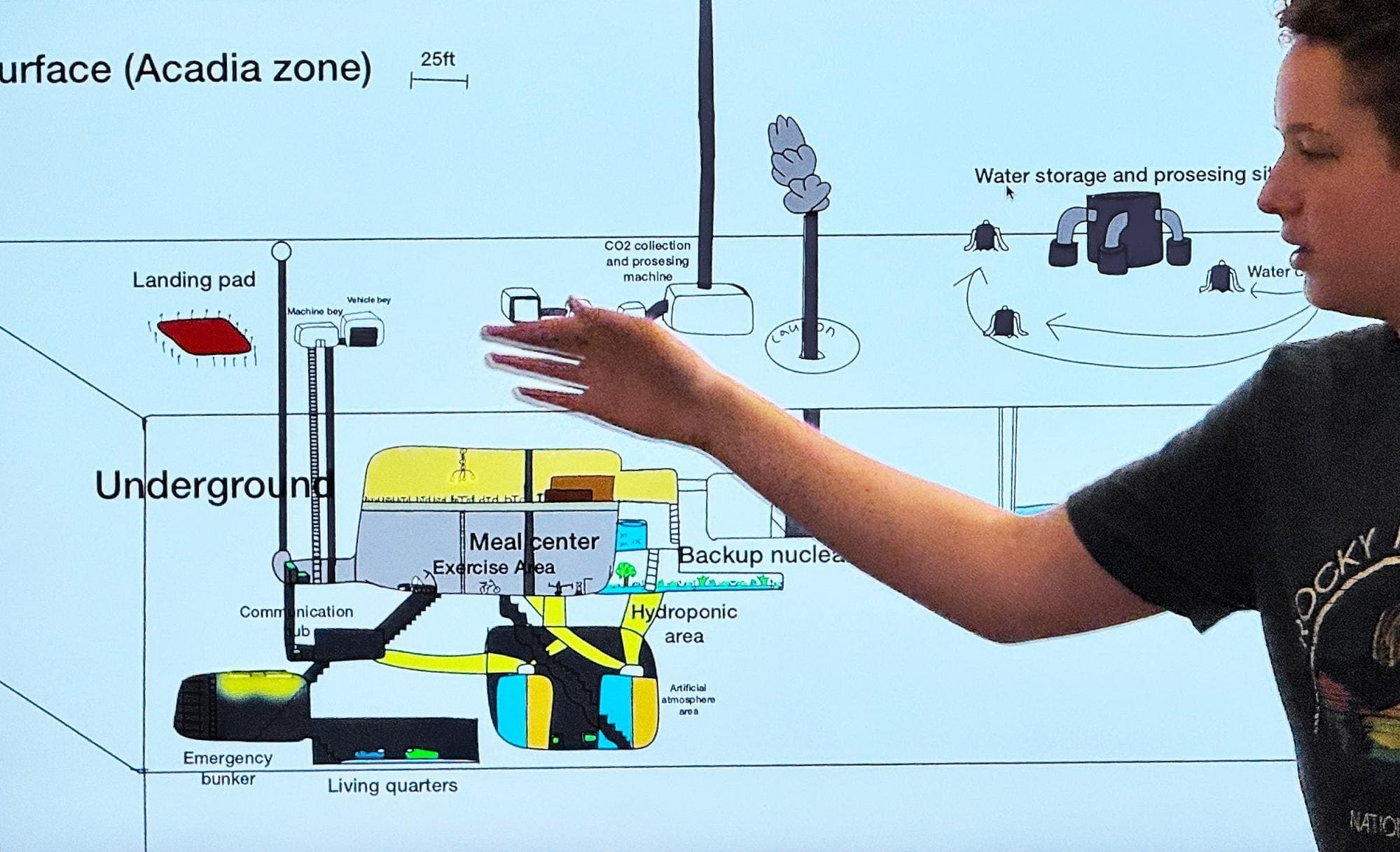
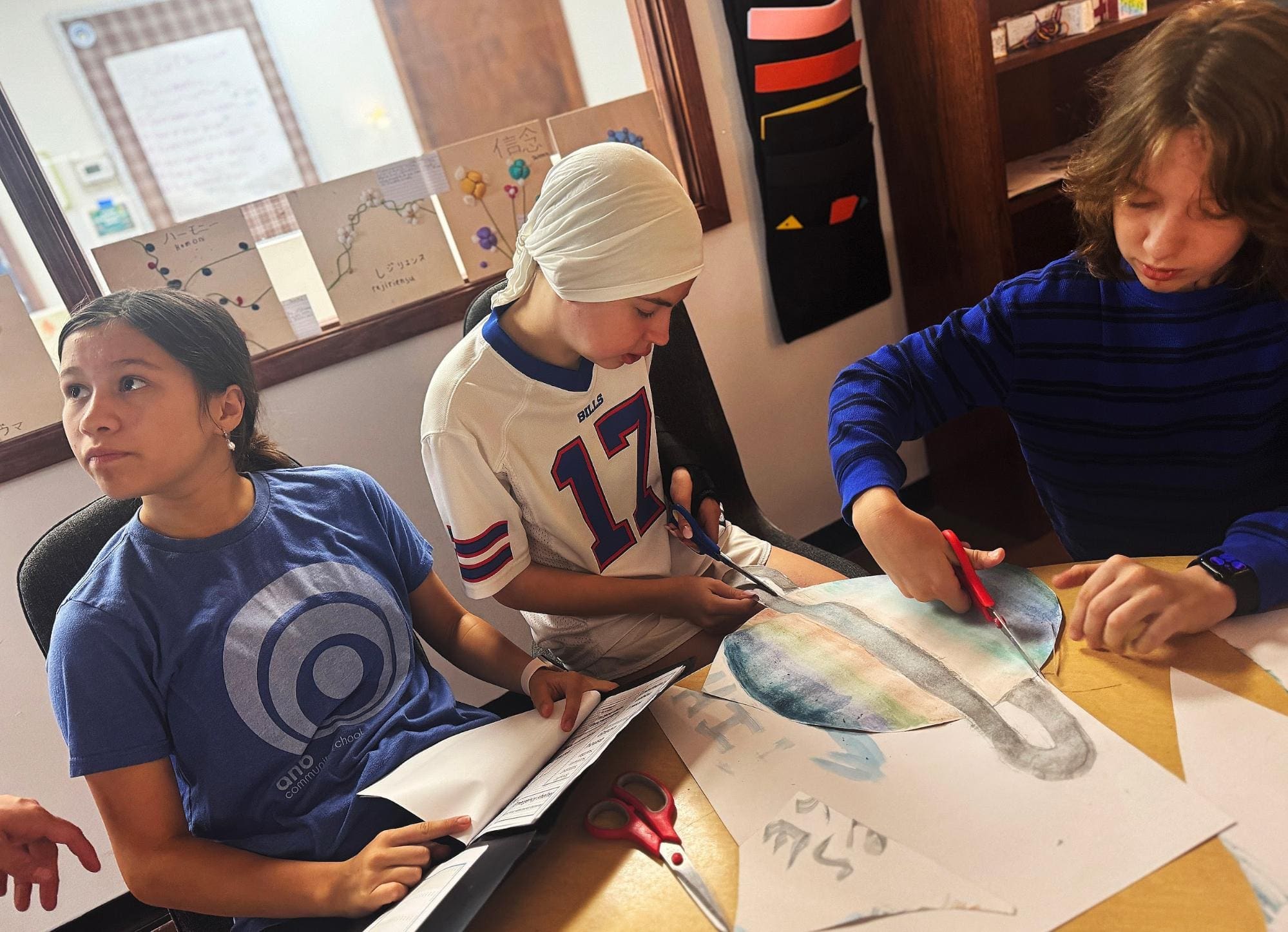
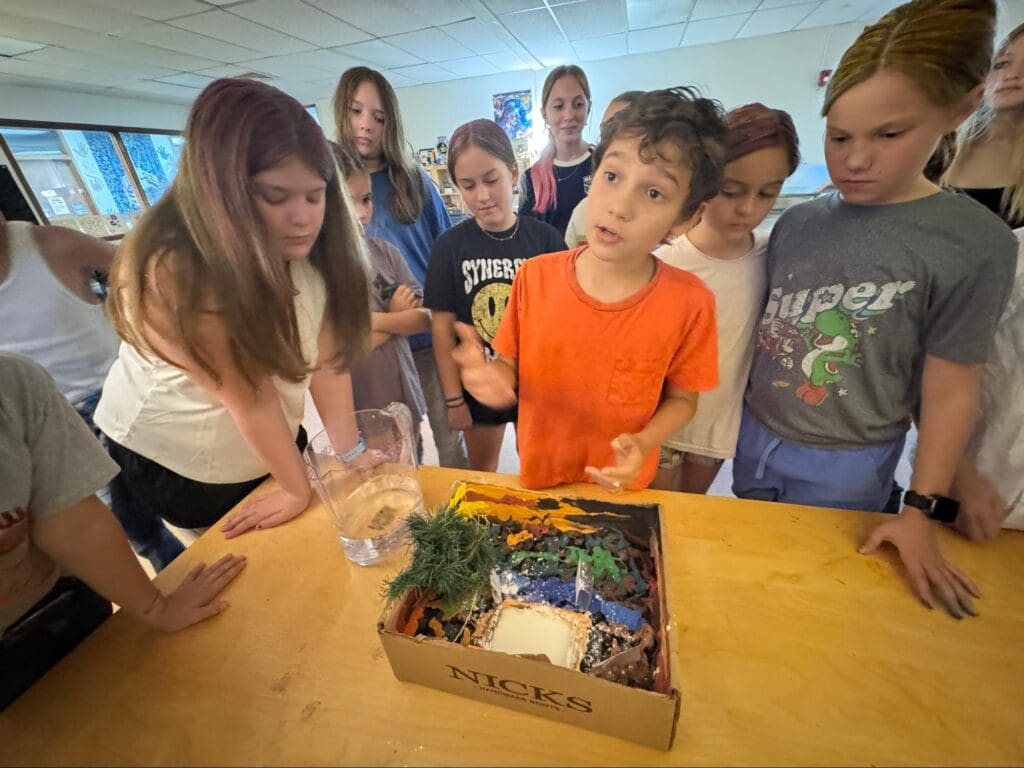
Students worked on various projects to extend their understanding of the planets. At top, students outlined their plans for a Mars colony, including solving complicated engineering issues. Above, student groups were assigned one of the bodies of the Solar System to illustrate and profile for a Scaled Distance model.
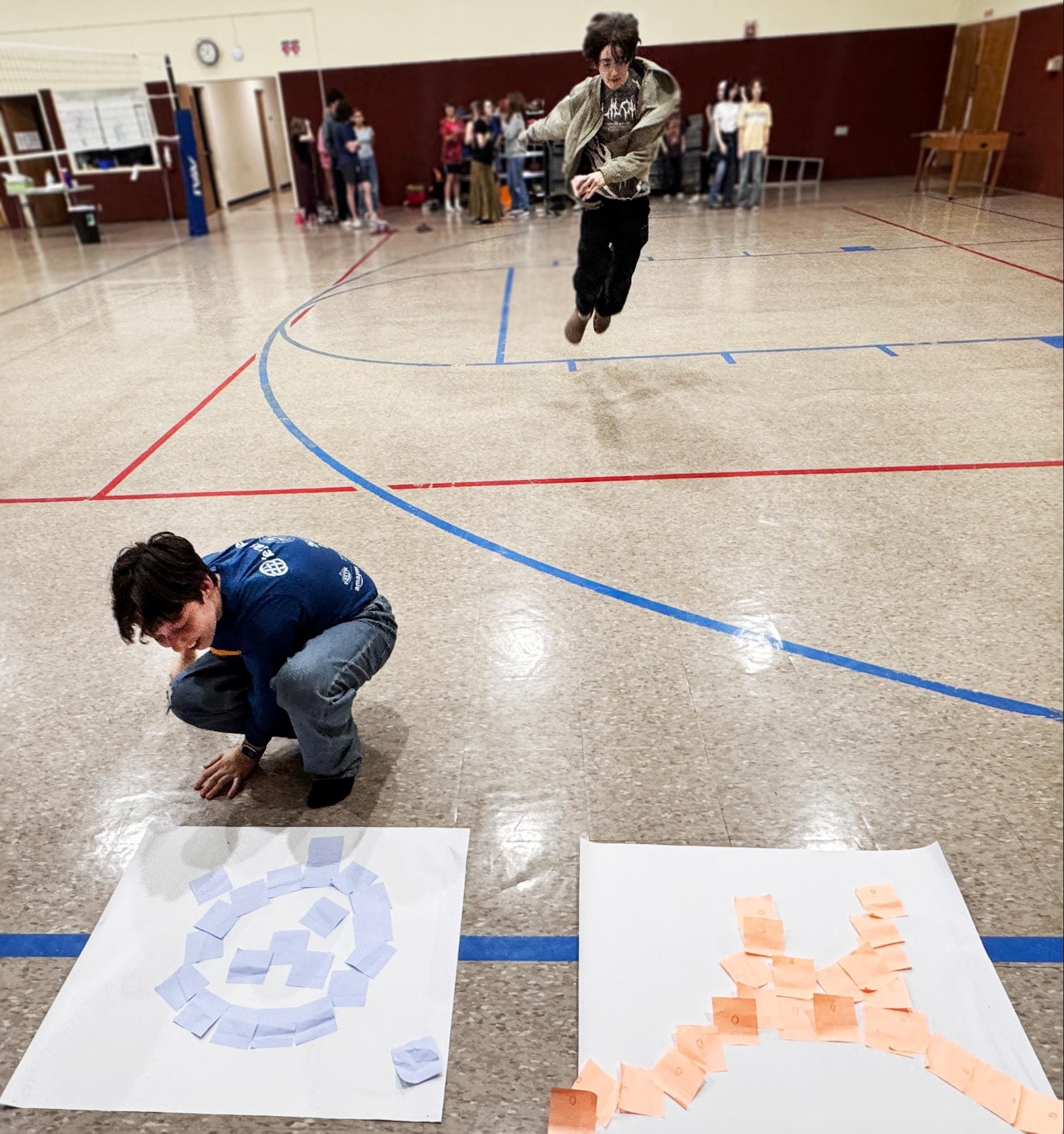
One of our weekly routines at the middle school level is our Flex and P.E. periods. This time gives students a chance to practice skills and get exercise. This week, we combined both as student groups, attempting to build a zoo “animal” with Post-it notes. In a relay format, students moved towards their play area either hopping, sliding, skipping, or crawling. The products were evaluated by Mr. Steve and Ms. Amanda, who had to guess what kind of animal the image produced. 3 out of 4 wasn’t bad.