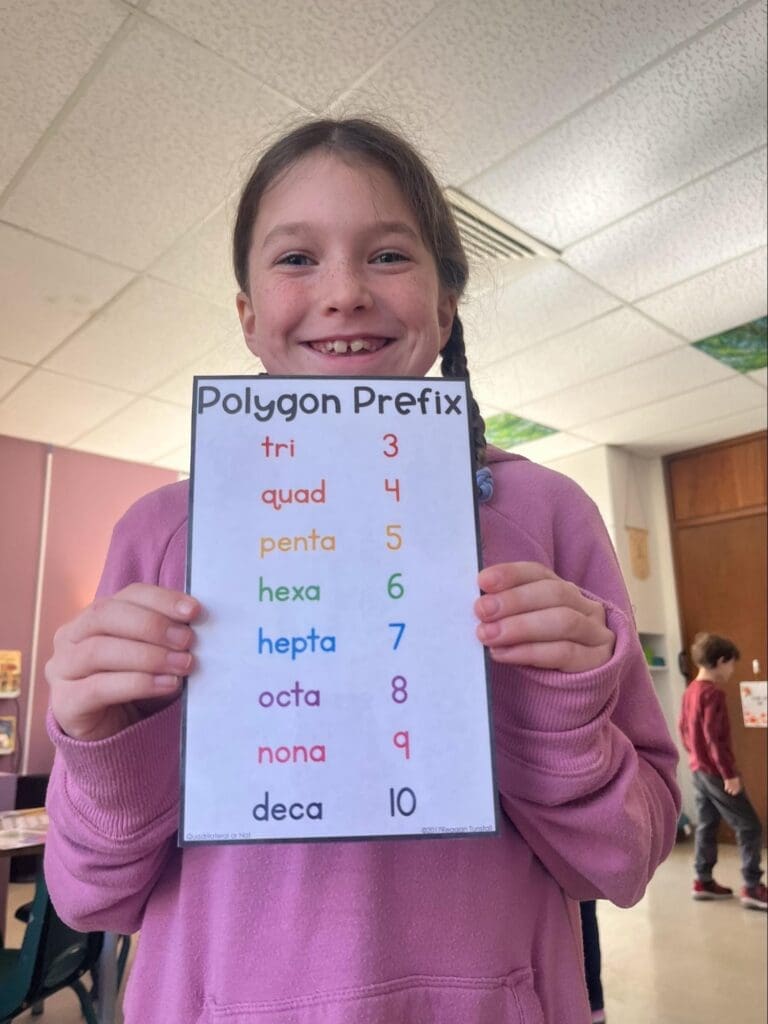
Our time unit is wrapping up! The Betas have been working SO hard at telling time to the exact minute! They’ve just about got it. Next week we’ll wrap it up and begin our unit on measurement!
ELA
Everyone has begun a new book for Book Clubs this week! The current line up includes: Here’s Hank, Ralph S. Mouse and Frog & Toad. I’m so proud of this batch of burgeoning readers!
In phonics this week we studied spellings of the long u sound (both /yoo/ and /oo/): u, u_e, ue, and ew and ow. Our sight words were: move, new and place; our vocabulary words were: exclude and curfew.
During writing we focused on figurative language. We learned about alliteration, onomatopoeias, metaphors & similes, hyperboles, personification and idioms. It was a doozy of a week, but we had fun playing lots of games with them and getting super creative by writing & illustrating our own!
Theme
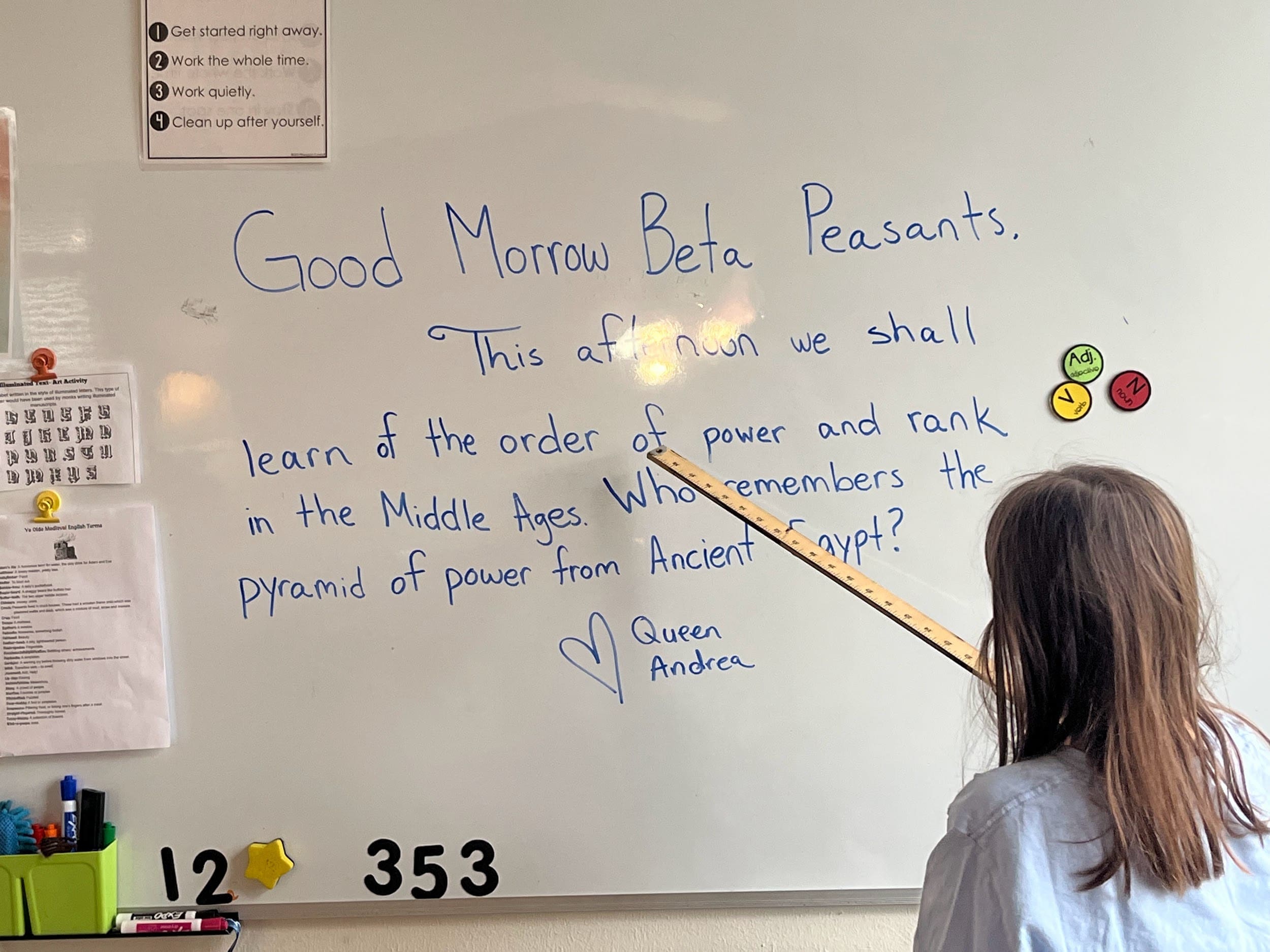
In theme this week we learned a bit more about the feudal system. Feudalism was the system in place during the Middle Ages in Europe that existed instead of strong central governments. Specifically, feudalism was a system in which people gave kings and lords money and worked in exchange for protection.
The Queen of Beta Manor has allowed her peasants some time to continue to get their house and one clothing item in order before heading back out to the fields. The Betas wrote about their experience in the fields in our journals using the perspective of a peasant. We have heard a horrible sickness is moving throughout the land. We hope it doesn’t reach us…
On Tuesday the plague had come to Beta Manor!
*The Black Death was a plague that killed many people. It first showed up in Europe in October 1347.
*It came to Europe on ships from the Black Sea.
*Over the next five years, more than 20 million people died from a disease that almost killed one-third of Europe’s population.
The Black Plague was a very contagious disease. It spread quickly from person to person. Even if people were healthy in the morning, they might die at night. Some towns shut themselves down and sealed their gates so no one could come in or out.It was a disease with symptoms like painful swellings. Buboes were found around the neck, armpits, and groin. They oozed pus or blood. The symptoms damaged your skin and tissue until you were covered in dark blotches. Yuck!
After learning a bit about it, we put ourselves the best we could in the shoes of the people who saw or experienced the horrors, writing about it in our journals. We sure are glad we live in the time we do!!
On Wednesday we found out we survived the Plague and are climbing the social ladder! We have moved from the lowly peasant to a merchant/craftsman! We learned that to become a master tradesman you must apprentice for about 7 years to learn that trade! For free. And often one would begin as a young teen boy. Once the apprenticeship was complete, he became a Journeyman. As a Journeyman, he would still work for a master, but would earn wages for his work.
The highest position of the craft was the Master. To become a Master, a Journeyman would need the approval of the guild. He would have to prove his skill, plus play the politics needed to get approval. Once a Master, he could open his own shop and train apprentices.
In a major city during the Middle Ages, there could be as many as 100 different guilds. Examples include weavers, dyers, armorers, bookbinders, painters, masons, bakers, leatherworkers, embroiderers, cobblers (shoemakers), and candlemakers. These were called craft guilds.
We designed a sign that we might have hung in front of our shop back 1000 years ago. Most often the signs were made of wood and metal, decorated with a simple picture depicting what was being made and sold. There is some debate as to why there were pictures and not words. Some say because many were illiterate, but regardless, many of the signs were mini masterpieces attempting to draw a buyer in!
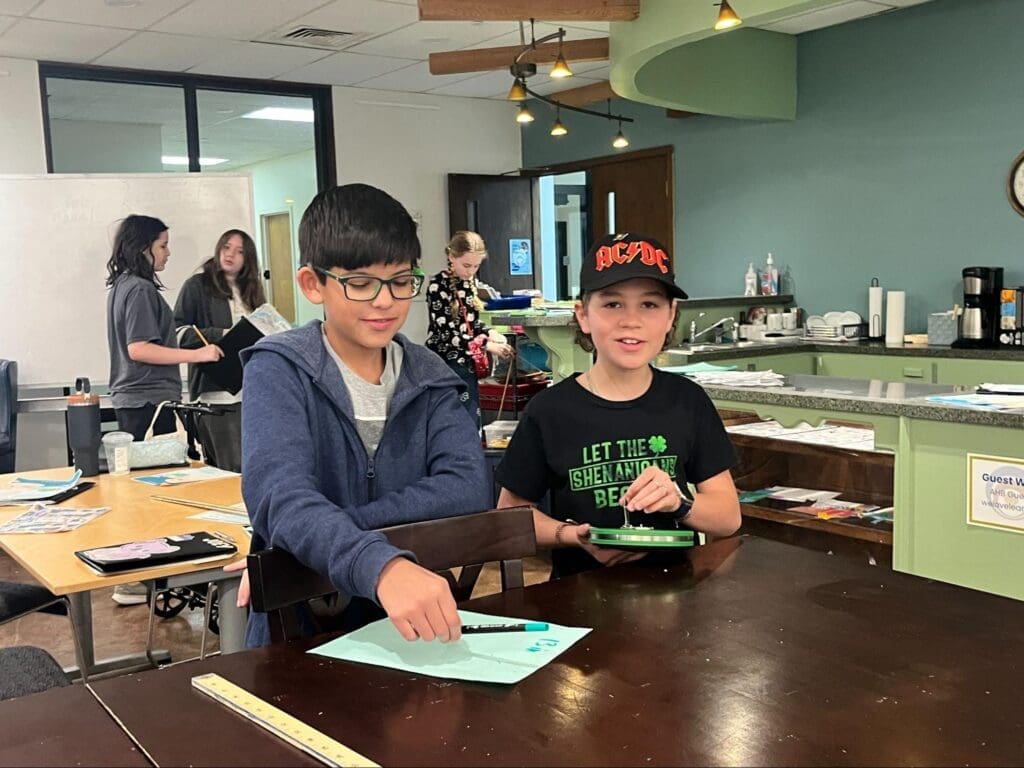
As we explore various medieval craftspeople, we will create artifacts. We ended the week by working on our Jumping Jacks- The jumping jack is an articulated, flat or sometimes three-dimensional puppet. Its limbs are manipulated using strings. These are grouped and attached to a single string, situated below the figure and the basic movement of the jumping jack is produced by pulling on this string which causes the arms and legs to move up and down. Often it is made out of wood that a craftsman would carve. We are making ours out of cardstock.
Some kiddos traced the body parts and all colored them in vibrant colors. The pieces will be cut and assembled with brass brads, strings will be attached, and when we pull the string, the arms and legs will move up and down!!!!!
| 
| 
|
|---|---|---|

| 
| 
|

| 
| 
|

| | 
|

| | 
|

| 
| 
|
Want to see more pictures, videos and more details about each day? Don’t forget to check us out on Instagram!