
Epsilon Newsletter
Math:
The 7th graders practiced adding and subtracting rational numbers and reviewed how to multiply and divide integers. On Thursday, they took a pop quiz! They were allowed to use their notes in their binder, but had to work independently. Be on the lookout for those in their P&P folder on Monday.
The Algebra students had lessons over solving equations with infinite and no solutions, solving algebraic proportions, and solving literal equations. After they finished their lesson each day students worked on a poster where they had to write their own equations with given answers.
Humanities:
This week in Humanities, students continued their journey through Esther Forbes’ Johnny Tremain while exploring the people, places, and ideas surrounding the dawn of the American Revolution. Students strengthened their language skills by working with vocabulary from the novel, writing original sentences, and transforming words into different parts of speech to better understand how word choice and language shape meaning.
Students also connected the world of the novel to their own interests by designing personal apprenticeship brands. Inspired by Johnny’s work as an apprentice, students created a brand that represented a trade, skill, or area of interest they could imagine pursuing themselves.
Finally, students began creating maps of Boston as it existed during the Revolutionary era. As they read, they are tracking the important locations and following Johnny and the other characters as the story moves throughout the city. This ongoing mapping project will help students visualize the setting of the novel while connecting its events and characters to the real geography and history of Boston.
Social Studies:
This week, students explored mercantilism and its role in shaping the development of the English colonies during the 17th and 18th centuries. Through guided note-taking, students learned how England used its colonies to acquire raw materials, expand trade, and increase the wealth and power of the mother country. Students also examined how mercantilist policies created both opportunities and challenges for colonists.
To wrap up the learning experience, students became colonial entrepreneurs and advertisers by creating TikTok-style videos designed to convince people to move to one of the English colonies. Their videos highlighted each colony’s geographic features, natural resources, economic opportunities, and advantages for settlement. This creative challenge allowed students to apply their knowledge of colonial geography and economics while thinking like people living during the colonial period.
Science:
This week we set up our schoolyard journals and learned about food chains. On Tuesday students chose a small plot somewhere outside to study all semester. The plot needed at least one living thing in it. Students made their first journal entries in their schoolyard journals. They had to sketch their sit spot, identify the biotic and abiotic factors, write what surprised them, and write one question they wondered. We will be visiting our sit spot once a week to document what changes. On Thursday we studied who ate whom with food chains. Students sorted cards into producers, consumers, and decomposers. Then sorted the consumers into herbivores, carnivores, and omnivores. Activity 2 had students use those cards to create different food chains. For activity 3, we went into the gym and assigned each student an animal. From there we built multiple food chains with yarn. After 5 food chains students noted the yard looked like a web! That’s when we introduced the term food web. Next week we will build food webs and learn about the 10% rule.
Spanish 1A: Explorando mundos:
This week in Explorando Mundos, students continued building confidence with greetings and short introductions in Spanish. We practiced asking and answering questions such as ¿Cómo te llamas?, ¿Qué tal?, and ¿Y tú? Students also worked on saying how they feel.
We added a new phrase to help students begin talking about where they are from. Students practiced short conversations with partners and completed a quick checkpoint to review our first set of greetings and introductions.
We also continued connecting language to culture by talking about names, identity, and how names can tell stories about family and place. On our Martes de música we learned about Veracruz, Mexico and the style of music called son jarocho. We listened to the Richie Valens’ version of La bamba and compared it to the original Son jarocho version from the state of Veracruz
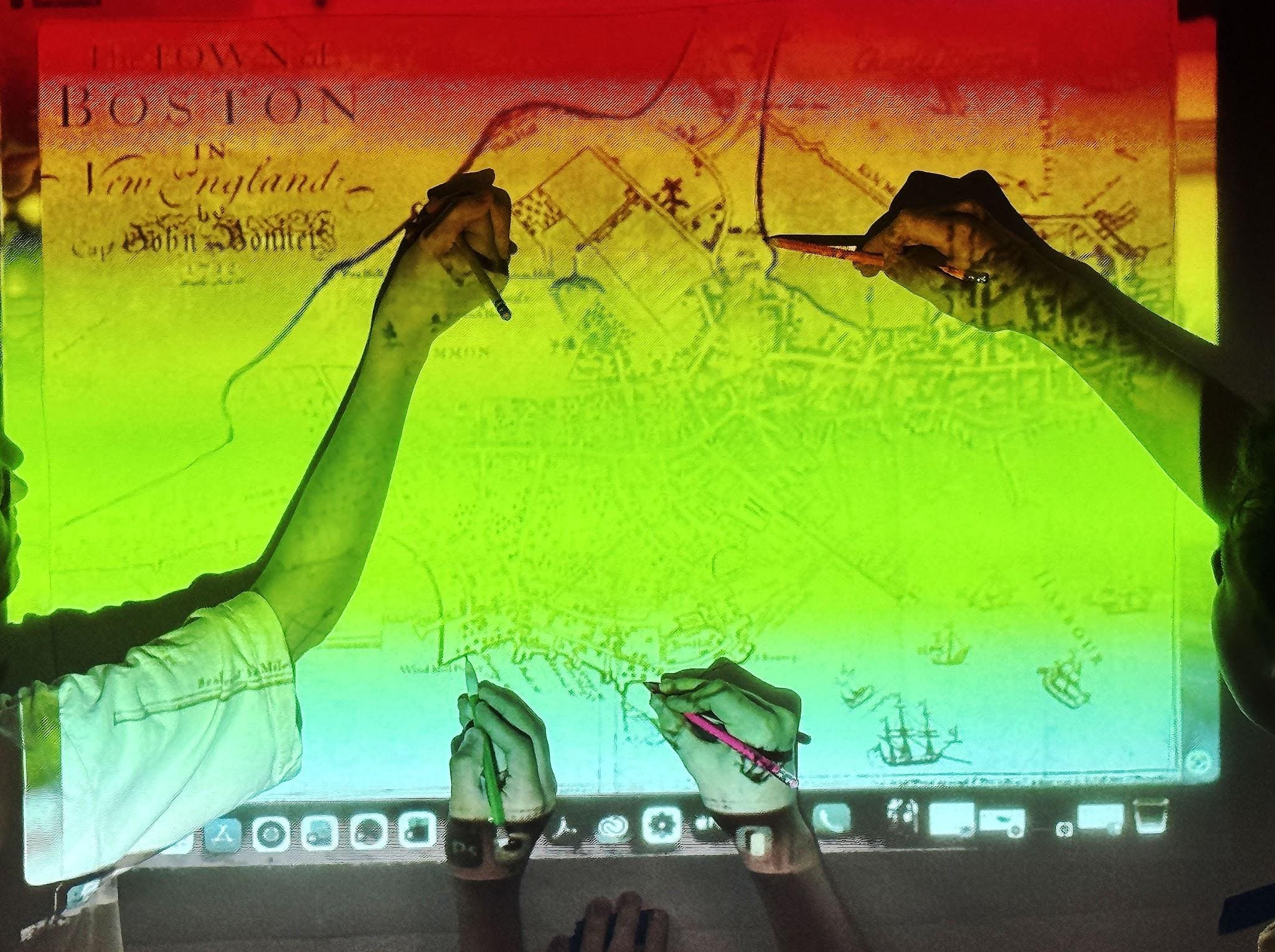
AT TOP: Spanish 1A Students in pairs as we practice our conversations. ABOVE: Students work on sketching a map of Boston to track the story of Johnny Tremain in Humanities
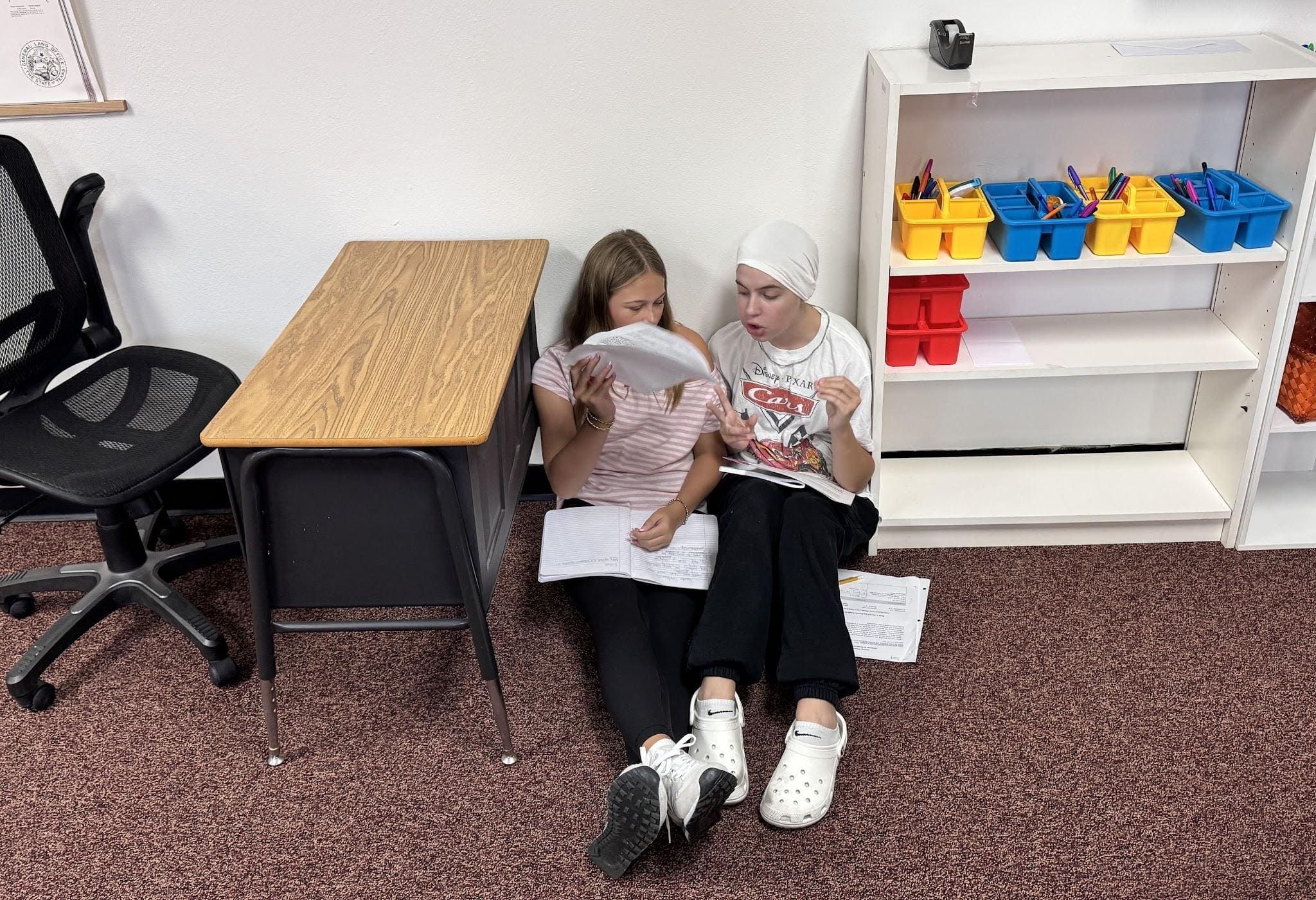
AT TOP: Humanities students transform sentences using vocabulary for their novel study of Johnny Tremain. ABOVE: Theme students film TikTok style videos trying to convince settlers to come to their English colony.
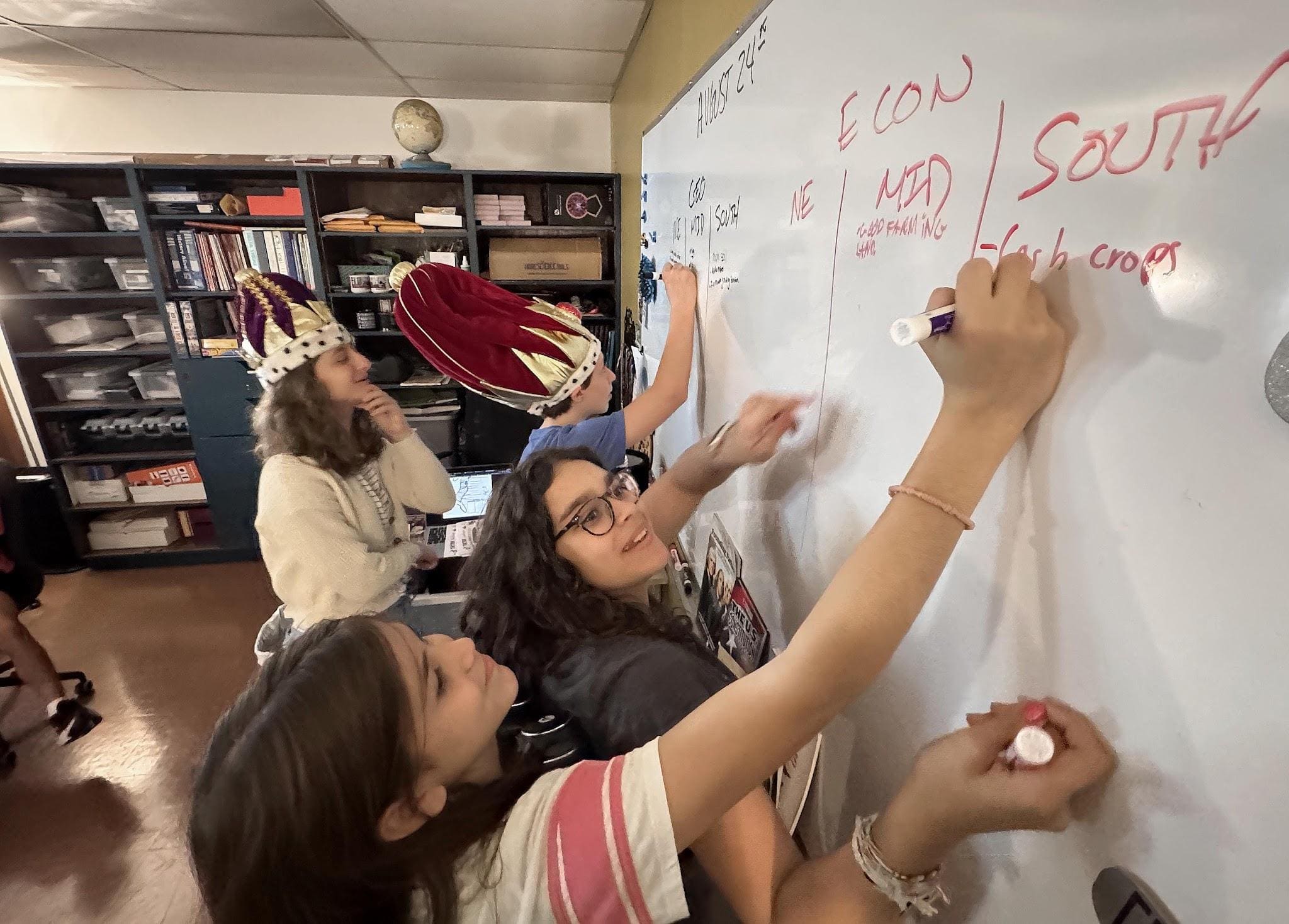
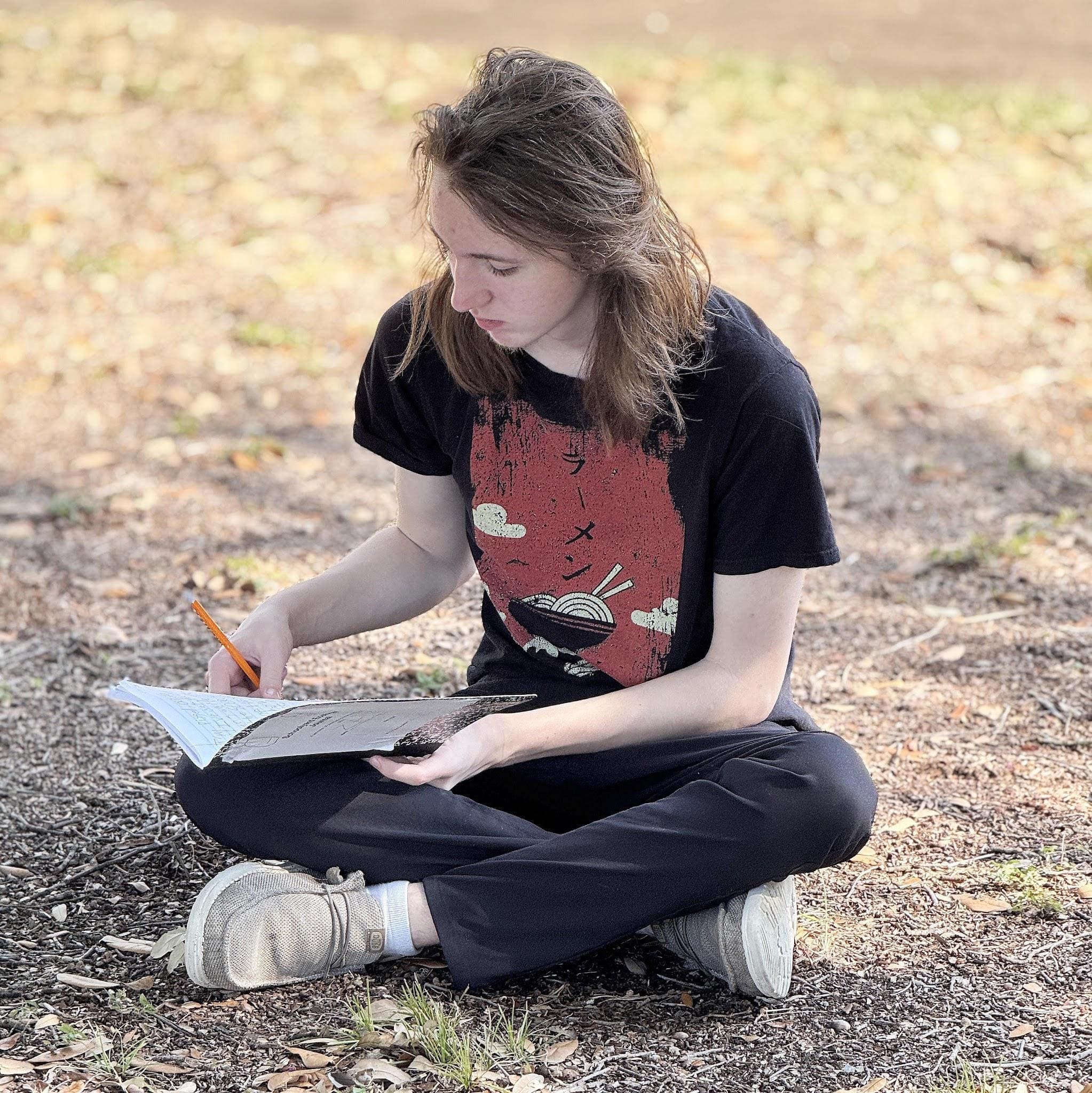
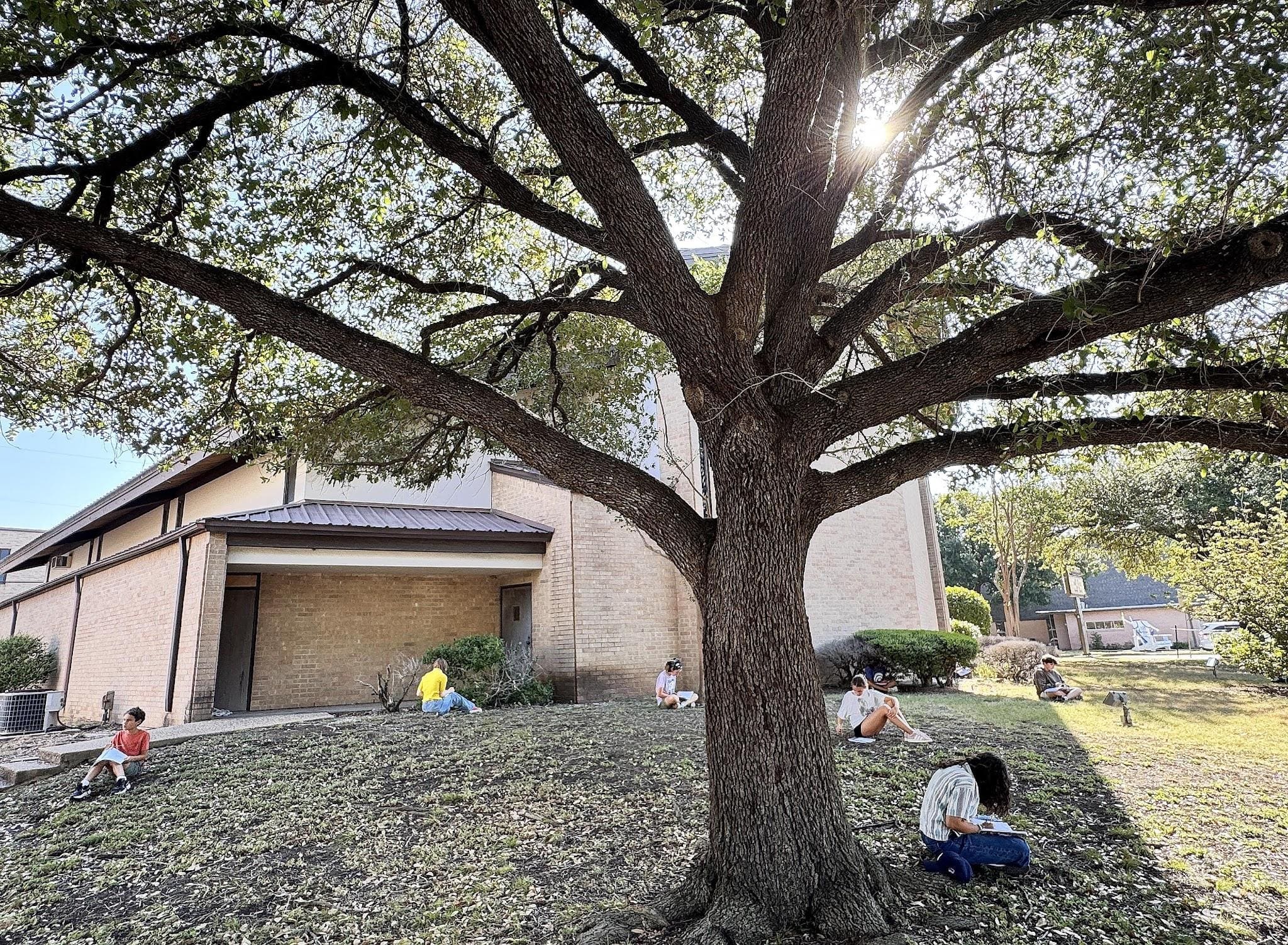
TOP LEFT: Dressing the part, students in Theme class outline characteristics about the economic system of Mercantilism, which made kings in Europe rich from creating colonies. TOP RIGHT: It was the first time for students to engage in field observations. They staked out a space and recorded the living and non-living items in the space, practicing Ecological field notes. ABOVE: The space outside the church provides ample opportunity to define the Biotic and Abiotic items in their fields of view.
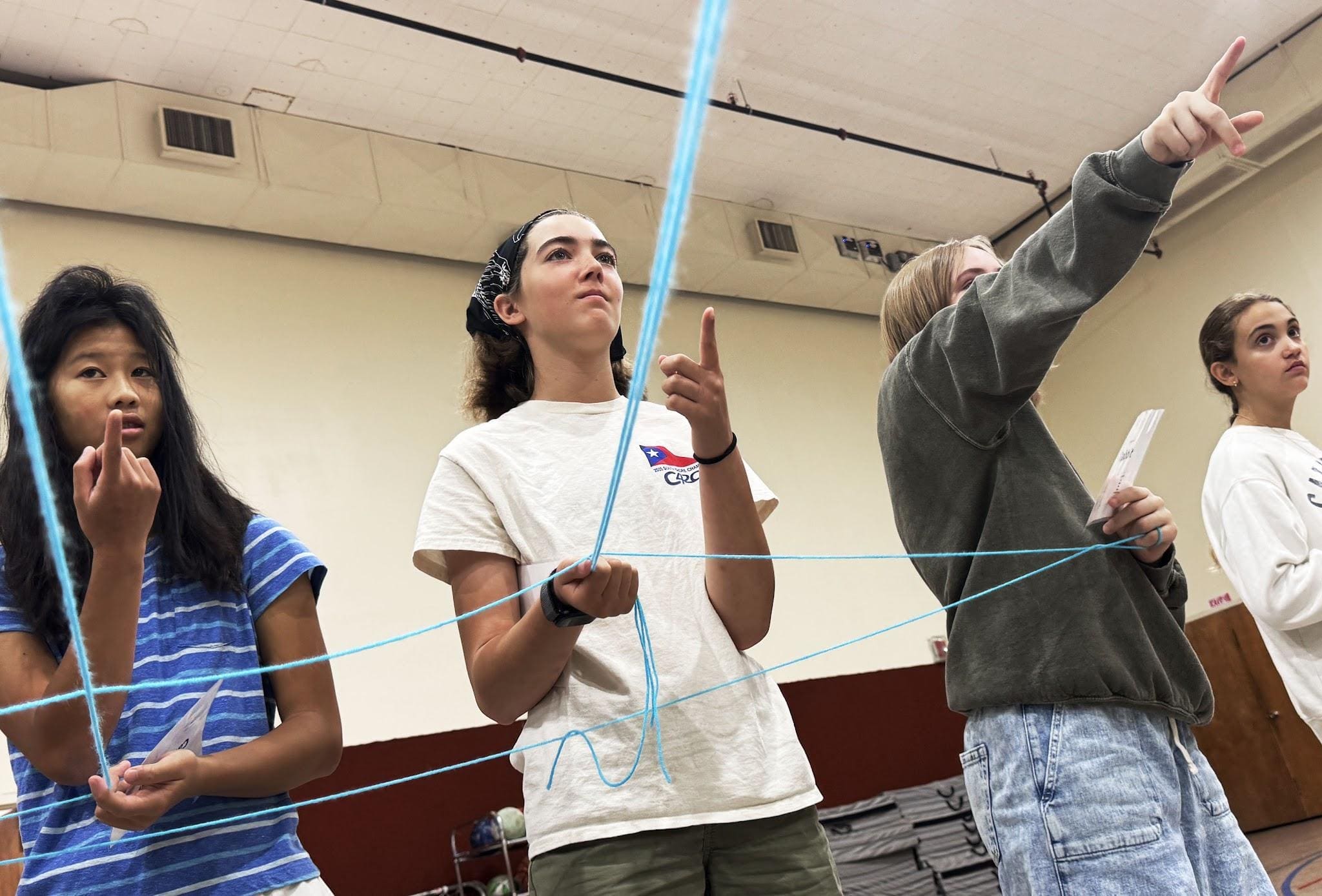
AT TOP: Using role cards as Producers, Consumer, and Decomposers, students design a food web from food chains. They needed to identify both what they eat, and what eats them.